Article · Guide
Flush-Mounted Hidden Sockets in Tile: What They Are, Types and Installation
A complete breakdown of flush-mounted hidden sockets — what they are, the types available, where to use them and how much they cost.
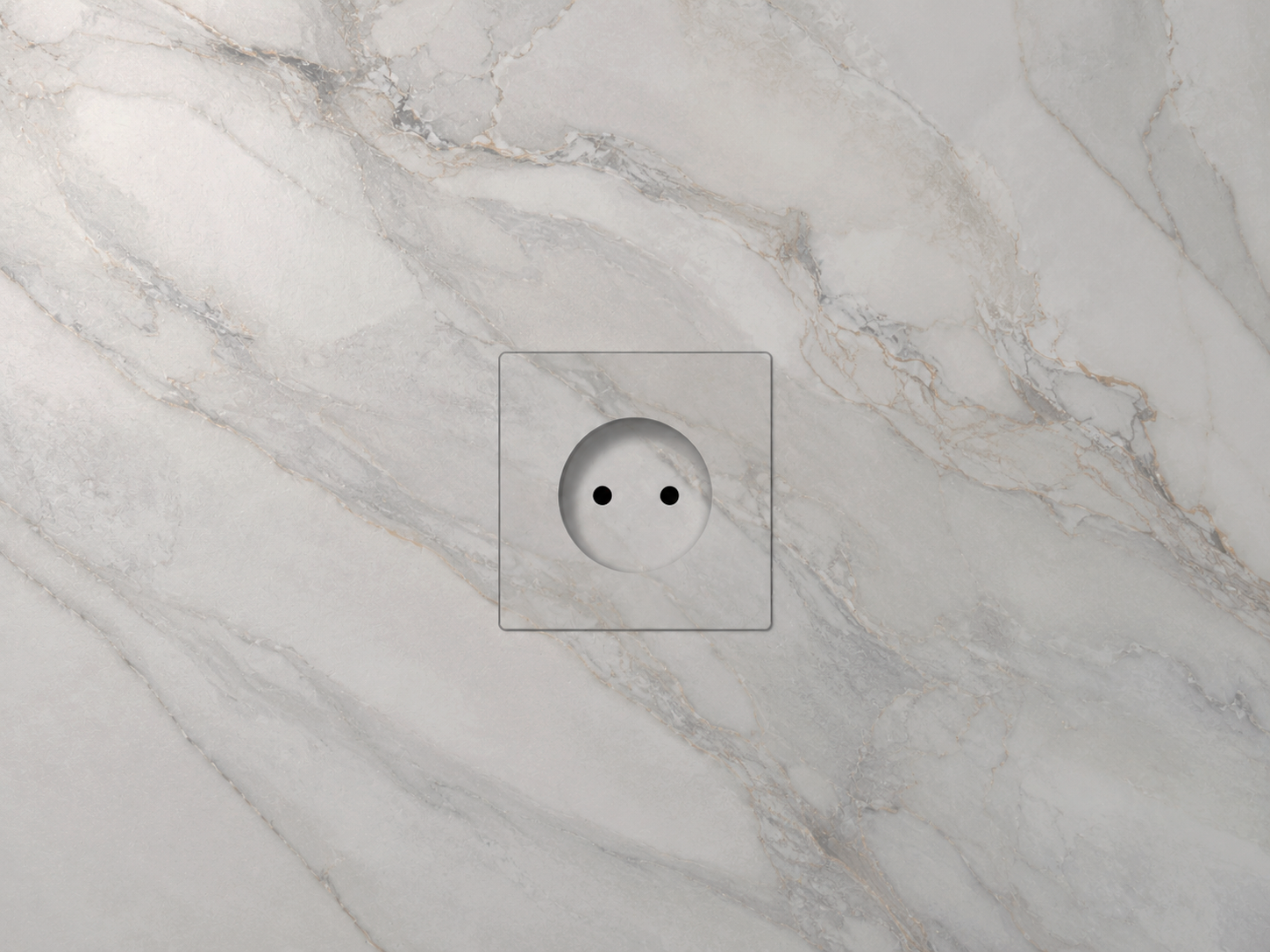
A flush-mounted hidden socket is a socket installed level with the surface of tile or porcelain stoneware, without a protruding plastic frame. The result is a seamless wall: the socket blends into the cladding and is barely noticeable. This solution is increasingly chosen for kitchen backsplashes, bathrooms and design interiors where a clean surface geometry matters.
How a hidden socket differs from a regular one
A regular surface-mounted or recessed socket has a plastic frame that protrudes a few millimetres above the tile. A hidden socket is mounted into a special frame beneath the cladding, and its face is covered by a piece of the same tile. The result is a flat surface — no frames, seams or protrusions.
Types of hidden sockets
- Surface-mounted — the simplest and cheapest option, but the socket clearly protrudes from the wall.
- Magnetic — the face panel is held by magnets; easier to install, but the surface is not perfectly flat.
- Bayonet — the panel locks with a twist; more secure than magnetic, but the design is more complex.
- Flush-mount — the socket is fully recessed into the cladding, with only tile visible outside. The cleanest result — this is the type WAVER STORE produces.
For a detailed comparison by price, installation complexity and appearance, see our article on comparing hidden sockets.
Pros and cons
Pros: a clean look without frames, the socket does not break the tile pattern, it fits minimalist interiors and works for both kitchen and bathroom.
Cons: installation is more complex than a regular socket and requires an accurate tile cut, and the cost is higher than surface-mounted solutions. These trade-offs are offset by the appearance and solved by the precise template included in the kit.
Where hidden sockets are used
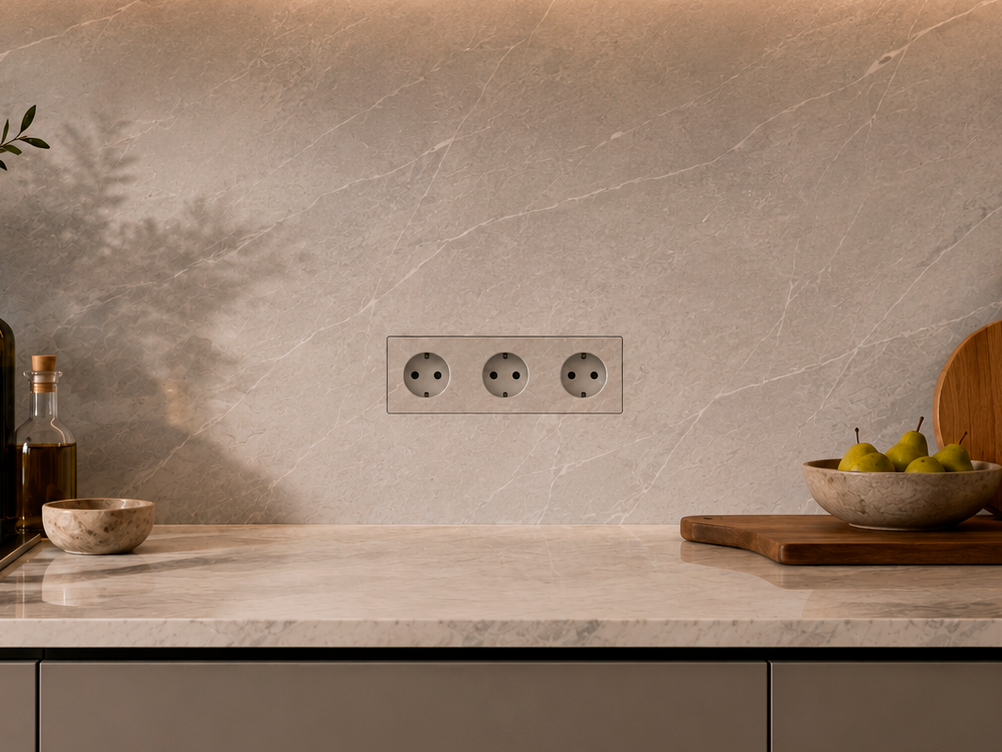
- Kitchen. Flush sockets on the backsplash do not break the tile and stay out of the way of appliances.
- Bathroom. Hidden installation in porcelain stoneware while respecting safety zones.
- Living room and bedroom. Flush sockets in a feature wall or TV zone.
How installation works
In short: mark with the template → cut the tile with a Ø42 mm core bit → glue the mounting frame → install the socket → adjust flush → final assembly with the ceramic insert. A full step-by-step guide is available in the PDF manual.
Prices
The retail price of a WAVER STORE socket is 2,599–2,999 RUB per gang depending on quantity. Tilers and pros get special pricing from 1,999 RUB. The kit includes the mounting frame, cut-out template and manual.
Frequently asked questions
It is a socket installed level with the tile or porcelain stoneware, without a protruding plastic frame. The outside stays a flat cladding surface, so the socket is almost invisible.
Yes, as long as electrical safety zones are respected. Sockets are placed away from direct water zones and connected through an RCD or a residual-current breaker.
The standard design fits tile and porcelain stoneware 8–14 mm thick. We can make custom versions for a 6–20 mm range on request.
Retail price ranges from 2,599 to 2,999 RUB per gang depending on volume. Pro pricing for tilers starts from 1,999 RUB. A cut-out template and manual are included.